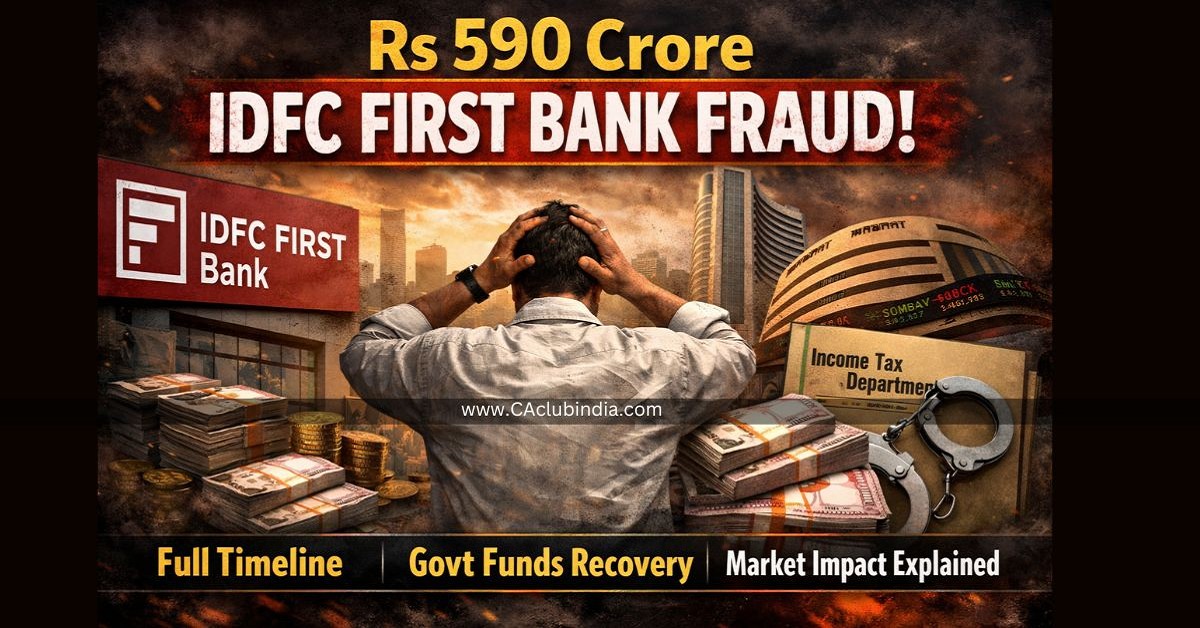
A major financial irregularity worth nearly Rs 590 crore has emerged at a branch of IDFC First Bank in Chandigarh, sending shockwaves across the banking sector and triggering swift action from regulators and government authorities. The incident, linked to accounts of the Haryana government, has raised serious concerns about internal controls, monitoring systems, and operational oversight within banks.
Timeline: How the Fraud Unfolded
The issue reportedly surfaced during routine reconciliation when government officials noticed discrepancies while reviewing balances in accounts maintained at the bank's Chandigarh branch.
What initially appeared to be accounting mismatches soon revealed unauthorized transactions that created a massive gap between actual deposits and recorded balances.
Once detected, the bank immediately reported the matter, launched an internal investigation, and alerted authorities.
Employees Under Scanner
Preliminary findings indicate that a small group of branch officials allegedly carried out unauthorized transfers over a period of time. The bank has suspended the employees involved and initiated disciplinary proceedings while a forensic audit is underway to determine the exact modus operandi.
Law enforcement agencies are also examining whether external parties played any role in facilitating the transactions.
Govt Funds Restored Quickly
In a major relief, Haryana Chief Minister Nayab Singh Saini stated that the bank restored most of the funds, along with applicable interest, within a short period after the fraud was detected, ensuring no long-term loss to public money.
Officials emphasized that strict action will be taken against those responsible once investigations are completed.
Stock Market Reaction
Following the disclosure of the fraud, shares of IDFC First Bank witnessed sharp volatility as investors reacted to governance concerns. The fraud amount is significant relative to the bank’s quarterly earnings, which amplified market sensitivity.
Analysts say the long-term impact will depend on investigation outcomes and improvements in risk controls.
Regulator's View
The Reserve Bank of India has been monitoring the situation closely and indicated that the case appears to be an isolated operational lapse rather than a systemic banking risk.
However, the incident is expected to prompt closer scrutiny of how banks manage government accounts and reconciliation processes.
Why This Incident Matters
This case highlights several key risks in the banking ecosystem:
- Weak internal checks at branch level
- Delays in reconciliation processes
- Concentration of operational control
- Governance and audit gaps
Experts believe the episode could lead to tighter compliance requirements and stronger monitoring frameworks across the sector.
What Happens Next
The final findings of the forensic audit and regulatory review will determine the legal and financial consequences. Possible outcomes include penalties, stricter compliance directives and changes in internal risk management practices.
For now, the recovery of funds has helped contain immediate financial damage, but reputational impact remains a key concern for the bank.
Conclusion
The Rs 590 crore fraud at IDFC First Bank underscores the importance of strong governance, real-time monitoring, and accountability in handling public funds. While swift recovery has limited financial fallout, the incident serves as a warning for the entire banking sector to strengthen internal safeguards.









 CAclubindia